

What Really Happens When You Ignore Them
If your gums bleed when you brush or floss, it’s easy to write it off as nothing, or assume you’re just brushing too hard. But bleeding gums are actually one of the most common early warning signs your body gives you, and here in Far North Queensland, where our warm climate makes hydration and oral balance even more important, it’s worth paying attention to.
Bleeding gums are never just a random occurrence. They’re your body’s way of signalling early-stage inflammation. Here’s what’s actually happening beneath the surface, what tends to happen if it’s left untreated, and how gentle, early care can protect your smile for the long haul.
What do bleeding gums actually mean?
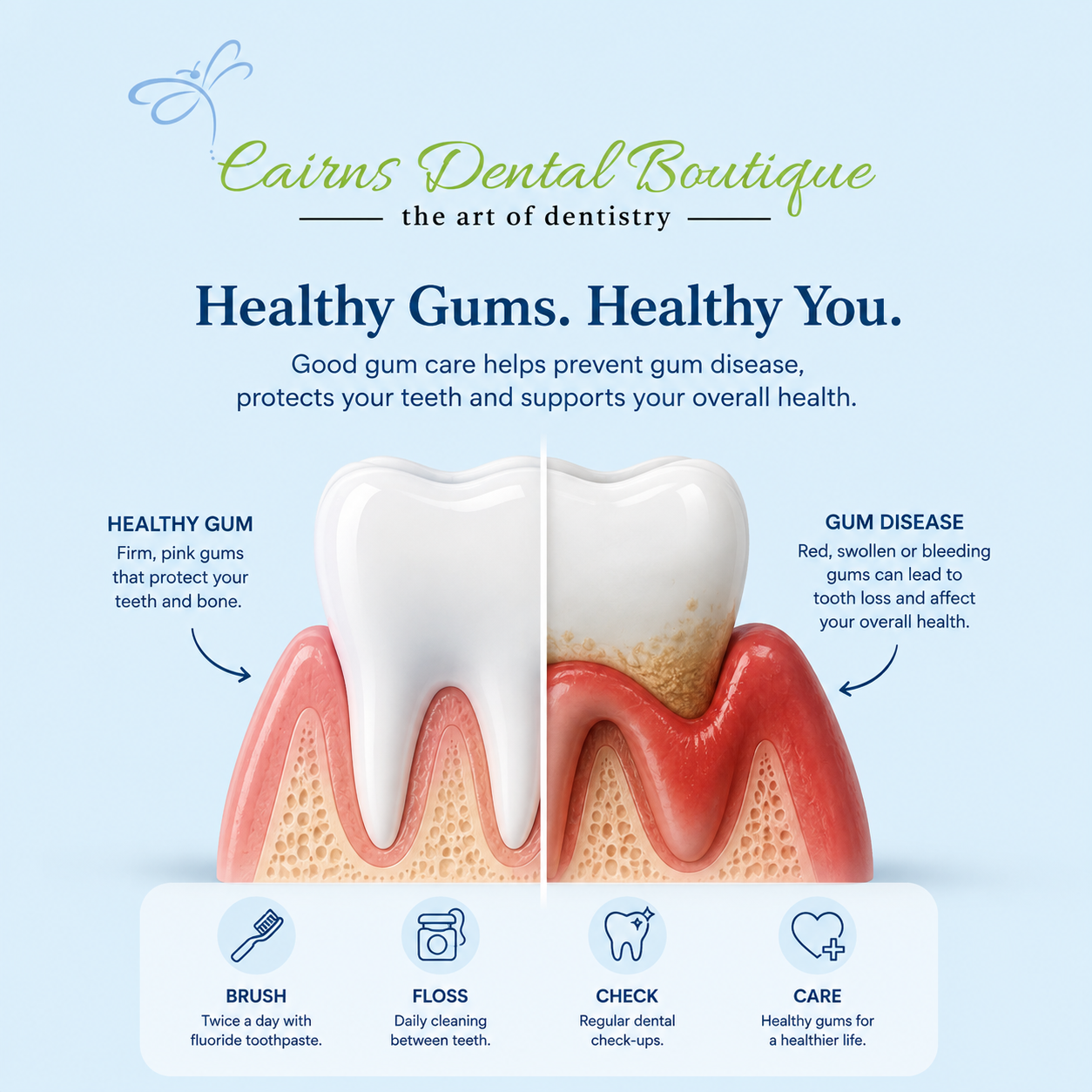
When plaque builds up along the gumline, the bacteria in it trigger an immune response. Your body sends extra blood flow to the area to fight it off, which leaves the tissue swollen, sensitive, and prone to bleeding at the slightest touch.
In its earliest stage, this is known as gingivitis. The good news is that at this stage, it’s completely reversible. Because the bone and deeper connective tissue haven’t been affected yet, catching gingivitis early means your gums can usually be restored to full health with simple, non-invasive care.
What happens if it’s left untreated?
Left alone, that inflammation doesn’t go away on its own; it quietly progresses beneath the surface. Over time, mild gingivitis can develop into a more serious condition called periodontitis. As the infection continues, the gums begin to pull away from the teeth, forming pockets where food and bacteria collect out of reach of a toothbrush. From there, the immune response combined with bacterial toxins starts to break down the jawbone that anchors your teeth, and unlike gingivitis, this stage isn’t reversible. Without that bone structure holding them in place, teeth can shift, loosen, and eventually be lost.
It doesn’t stop at the mouth, either. Oral health isn’t isolated from the rest of the body, and the chronic inflammation and bacteria involved in advanced gum disease can enter the bloodstream. Research has linked this to other health issues, including heart disease and complications with diabetes, which is part of why we take early intervention seriously. If you’d like to understand where your own gum health sits, book a check-up with our team, and we’ll walk you through it.
Gentle, proactive ways we protect your gums
Looking after your gums doesn’t mean harsh or uncomfortable treatment. Modern, conservative dentistry focuses on low-impact, targeted care that works with your body to help tissue heal, rather than intervening only once something’s gone wrong. In practice, that starts with gentle, precise cleaning: using comfortable ultrasonic tools, we clear built-up tartar and bacterial biofilm from above and below the gumline. During routine check-ups, we also measure gum health down to the millimetre, so subtle changes get caught long before bone loss becomes a concern. And rather than a generic reminder to floss more, we’ll help you find small, realistic habits, like the right interdental brush or rinse, that actually fit into your routine and that you’ll keep up with.
Prioritising your long-term health
Ignoring bleeding gums is a bit like ignoring an engine light: it’s far easier, and far gentler, to deal with early than to repair the damage later on. Protecting your natural teeth starts with protecting the foundation that holds them in place.
Noticed a bit of bleeding when you brush or floss?
Don’t wait for it to become uncomfortable. Mention it at your next visit, or get in touch with our friendly team to arrange a gentle gum health assessment. We’ll take a close look together using low-impact diagnostics and help get your smile back to feeling healthy, fresh, and comfortable.